India’s Fashion From Traditional dress to Modern styles
The Ever-Evolving Legacy of Indian Fashion
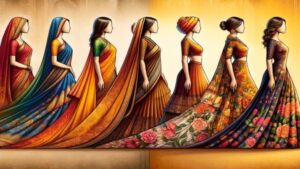
India’s fashion journey is a rich blend of tradition, culture, and modern influences, reflecting centuries of evolution. From the elegant drapes of the Vedic era to the regal embellishments of the Mughal period and the fusion of Western styles during colonial rule, Indian fashion has continuously transformed while staying rooted in its heritage. Today, as designers embrace sustainability and innovation, traditional garments are being reimagined for the contemporary world. This blog explores the fascinating history and future of Indian fashion—a seamless fusion of past and present, tradition and modernity. India boasts a rich tapestry of fashion woven from cultural, religious, and historical influences, extending far beyond mere clothing. Our heritage remains deeply ingrained in contemporary fashion, blending traditional elements with modern styles and Western influences. Let’s explore the fascinating journey of Indian fashion and its transformations over the centuries.
Ancient Roots: The Indus Valley Civilization
The origins of Indian fashion can be traced back to the Indus Valley Civilization, flourishing during the Harappan and Mohenjo-daro periods. This advanced society, renowned for its sophisticated urban planning, demonstrated a keen sense of aesthetics in their attire. Archaeological findings suggest the use of textiles such as cotton, linen, and wool. Cotton, well-suited to India’s climate, was widely used, while wool provided warmth in colder regions.
Men likely wore loincloths and long tunics, while women adorned skirts and flowing garments. Plant-based dyes were used to add vibrant hues to fabrics, showcasing an early understanding of natural dyeing techniques. Jewelry and bead work played an essential role in reflecting the cultural values and artistic sensibilities of the time.
The Vedic Period: Draping as an Art Form
During the Vedic period, religion and social status influenced clothing practices significantly. Wool, cotton, and silk became more prevalent, and attire reflected social hierarchy. Men typically draped cloth around their waists, a style that evolved into the traditional dhoti. Women wore long, draped garments that served as precursors to the modern sari. The art of draping became a defining feature of Indian attire, a tradition still cherished today.
Mauryan and Gupta Empires: The Rise of Silk and Embellishments.
The Mauryan Empire saw major advancements in textile production, enhancing fabric quality. Silk gained widespread popularity, and garments were meticulously woven and draped with intricate elegance. This period also introduced blouses as an integral part of women’s attire. Jewelry, including necklaces and armlets, became commonplace, adding grandeur to clothing.
The Gupta Empire continued this trend, further refining the use of embroidery and embellishments. Clothing became more elaborate, reflecting the prosperity of the time. Women adorned themselves with finely crafted jewelry, while men wore draped dhotis paired with intricately designed upper garments.
Medieval India: Persian and Mughal Influences
The arrival of Muslim rulers brought new fashion elements from Persia, the Middle East, and Central Asia. Fabrics such as muslin, velvet, and brocade became highly sought after. Garments like the “kaftan” and “jamdani” gained popularity, many of which continue to influence contemporary Indian fashion. Women embraced long skirts and “dupattas,” while men adopted robes and tunics.
During the Rajput era (16th-18th centuries), distinct and vibrant clothing styles emerged. The lehenga, a long, flowing skirt, became iconic for weddings and festive occasions. Rajput men typically wore dhotis paired with angarkhas (long tunics or coats), and turbans adorned with jewels and feathers. Exquisite embroidery, including kundan and meenakari techniques, became a hallmark of regal fashion.
Colonial India: Western Influence and Mechanization
The British colonial period introduced Western fashion to India’s elite. Suits, dresses, and trousers became fashionable, especially among the upper class. Mechanized textile production led to the mass production of clothing, influencing everyday attire. The fusion of Indian and Western styles gave rise to garments such as the Nehru jacket, which remains a classic today.
Post-Independence: Fusion of Traditional and Modern Styles
After independence, traditional clothing continued to be widely worn, but Western-style garments gained popularity, especially in urban areas. The liberalization era saw an increased influence of global fashion trends, leading to the evolution of Indian garments. Salwar kameez, lehengas, and dhotis adapted contemporary elements, reflecting a blend of heritage and modernity.
Contemporary Indian Fashion: A Return to Roots
Today, while Western-style clothing like t-shirts, jeans, and suits are ubiquitous, there is a growing movement to revive and celebrate traditional Indian attire. Designers are creatively reimagining classic garments, incorporating sustainable practices and modern aesthetics. Handloom fabrics, organic dyes, and eco-friendly techniques are making a resurgence, aligning fashion with environmental consciousness.
The Future of Indian Fashion
Whether traditional Indian clothing will see a full-scale revival remains uncertain. However, the ongoing dialogue on cultural identity, coupled with the rising awareness of sustainable fashion, suggests a promising future for Indian heritage garments. As fashion continues to evolve, the seamless fusion of tradition and modernity will keep India at the forefront of global style trends.
Welcome to Fabulous Fashion Boutique – Where Style Meets Passion
Step into a world of elegance and innovation at Fabulous Fashion Boutique, a trendsetting fashion haven in the heart of Bangalore. Founded by a visionary entrepreneur and a talented homemaker with a passion for stitching and design, Fabulous brings you stunning creations that blend traditional craftsmanship with contemporary flair.
 Tailored to You: From chic Western wear to timeless Indian attire, we craft each piece to celebrate diverse body shapes with impeccable fits.
 Exquisite Craftsmanship: Discover mesmerizing designs featuring intricate embroidery and beautiful handwork that captivate the senses.
 Loved Globally: Our satisfied clients from across the globe keep coming back for more after experiencing the magic of our designs.
Whether you’re looking for something elegant, experimental, or utterly unique, Fabulous Fashion Boutique promises styles that leave a lasting impression.
Visit us in Bangalore or explore our stunning collection online to find your next show-stopping outfit.